
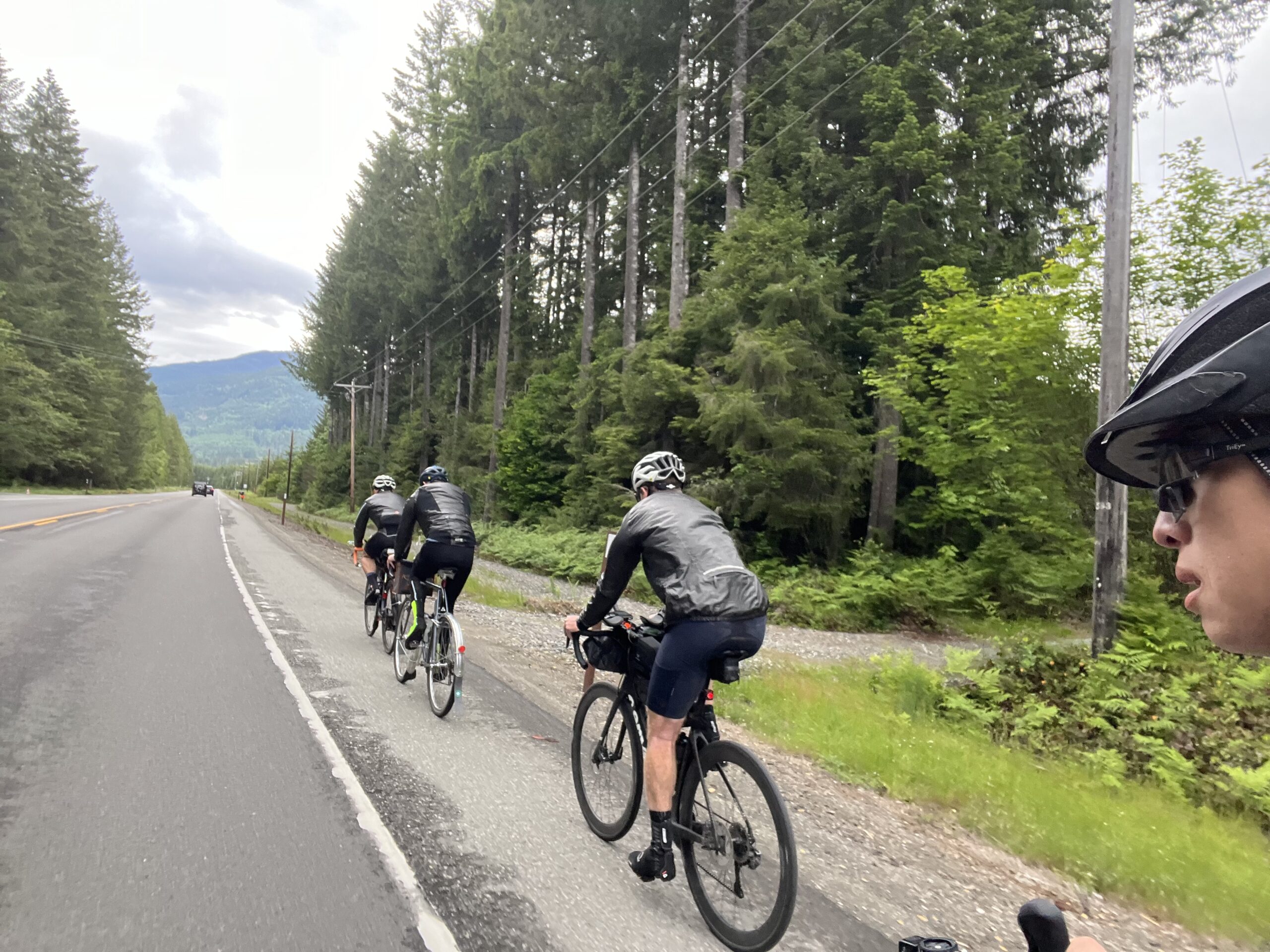
Randonneuring is self-supported long-distance cycling, on prescribed routes, as a non-competitive sport. It is also called audax or marathon cycling.
- Long-distance: Standard distances for randonneuring brevets are 200 km, 300 km, 400 km, 600 km, 1000 km, or longer. The BC Randonneurs club also runs “populaire” events, with routes shorter than 200 km, as an introduction to the sport.
- Cycling: Any purely human-powered vehicle is welcome! Although road bikes are most common, other kinds of bikes such as tandems, recumbents, folding bikes, and fixed-gear bikes are often used.
- Prescribed routes: Riders must follow the route for each event, and need to demonstrate passage through designated control points by filling in a brevet card.
- Self-supported: Riders may receive assistance at the control points. Between control points, you can accept help from other participants or random strangers. Randonneurs need to be prepared for mechanical mishaps, changes in weather, and other challenges en route!
- Non-competitive sport: As long as you finish the course within the time limit, your achievements are recognized by the club and recorded by the sport’s governing body, the Audax Club Parisien. Successfully completed rides may be used to qualify for awards.
Benefits and motivations
Randonneuring focuses on building endurance and resilience. Events are non-competitive and foster a strong spirit of cooperation and camaraderie. Riders often work together and share tips, even as they push themselves and each other to greater levels of performance.
Organizations and events in randonneuring are run by volunteers. You experience the spirit of cycling at a reasonable cost and no profit motive.
When a ride organizer shares a route that they have designed, it’s a geographical love letter. Randonneuring routes often take you to see stunningly beautiful scenery. Few experiences can match the joy of experiencing such scenes unfiltered from the saddle, and feeling the satisfaction of having gotten there by your own power.
Each distance tends to be different in character. For 200 to 300 km rides, you would typically push yourself hard, then perhaps enjoy a chat at the pub afterwards with similarly motivated cyclists and go home after a nice long day. The 400 to 600 km rides tend to involve some night riding and test your ability to persevere. At 1000 km and beyond, you’re going on a multi-day epic adventure with unforeseen challenges, and forming lasting friendships if you’re lucky enough to ride with a partner.
Yes, this sounds interesting!
For further information…